A ‘passport to leisure’ – but not for the poor?

By John Eady, chief executive at KKP

The UK Government, Sport England and a range of other agencies acknowledge the crucial role leisure facilities can play supporting people from vulnerable communities to get active via provision of inclusive and accessible opportunities for physical activity and social interaction.

Passport to Leisure (PtL) is the generic term used to describe the discounted cost access schemes offered by various UK local authorities to make sport, leisure and cultural activities more affordable for people on low incomes or certain benefits. While implementation of PtL is autonomous at individual local authority level, many look to Sport England frameworks to justify, design, evaluate and defend their schemes.

KKP’s strategic work with numerous local authorities gives us deep insight into needs, intentions and what is actually happening on the ground, from all angles. Despite well-intended corporate ambition to ensure the poorest in society have access to public sport and leisure facilities this is not being realised.

In this article, we explore the mismatches between reported data, current provision, quality processes and the real-world needs of those that PtL schemes should be supporting.

Why poverty is a barrier to participation

There is a well-established narrative around the standard range of “target groups” which face barriers to participation in sport and physical activity. While women and girls, people from global majority communities and people with disabilities can undoubtedly face additional obstacles, significantly less attention is devoted to the stark fact that the overriding barrier is poverty. Addressing this, together with its overlap with other personal and demographic traits, is key to solving the puzzle.

The numbers are striking. The Joseph Rowntree Foundation UK Poverty 2025 report confirms that 22% of the UK population (14.4 million people) live in poverty. This includes:

  • 1 million (two in ten) working-age adults.
  • 2 million (or three in ten) children.
  • 1 million (c. one in six) pensioners.

Noting that the overall level has barely moved since 2010, and is worsening, it reports that 40% of those in poverty are in “very deep” poverty (with incomes far below the standard line). These include:

  • 45% of children in larger (3+ children) and/or lone parent families.
  • Many minority ethnic groups have high rates of child, deep and persistent poverty.
  • 30% of disabled people. In addition, nearly half of all people who were disabled and living in poverty had a long-term, limiting mental condition = c. 2.4 million people.
  • 28% of informal carers.
  • 54% of adults in workless households.
  • 22% of part-time workers (double the figure for full-time workers).
  • 23% of self-employed people.
  • 44% of people living in rented accommodation and 35% of private renters.
  • Families claiming income-related benefits.

In practice, this means that over one fifth of the UK population is suffering the consequences of living in poverty. The connection with participation in sport and physical activity is as follows:

  • The most recent national Sport England Active Lives survey (23/24) highlights that people with two or more inequality characteristics are the least likely to be active.
  • SportInspired, a charity working with young people from the UK’s most deprived communities, reports that children in the 20% most deprived areas are three times as likely to experience mental health issues than their more affluent peers. It states that 4.2million children in England’s most deprived areas are overweight (40% of children living in poverty) and 81% of young people from these areas do not participate in sports clubs.
  • Swim England notes that young people’s swimming ability is significantly affected by family affluence and location (during school years 1-11). It reports that just 42% of children and young people with ‘low family affluence’ can swim 25 metres unaided (compared to 86% of those with high family affluence) and that only 45% of children and young people going to school in the most deprived areas of the country can swim 25 metres, compared to 76% in the least deprived localities.
  • According to StreetGames, families in the lowest income bracket have as little as £3.65 per week to spend on sport and active leisure. Children and young people from low-income backgrounds are half as likely to be members of sports clubs as their more affluent peers.

Is flawed logic diverting attention from real world challenges?

According to Sport England’s most recent Moving Communities Facilities Impact Report (April 2023 – March 2025), people living in the 20% most deprived areas of England account for 16% of the total number of leisure centre users. A 0.5% rise since the previous report (2022-24).

In what Sport England described as “notable growth,” the 2023-25 report itself showed a 9% rise in leisure centre usage by people from economically disadvantaged groups since the one before it (2021-23).

On the face of it, these statistics appear to demonstrate tangible progress in levelling up access to community sports and leisure facilities. A goal that reflects Sport England’s long-term “Uniting the Movement” strategy, which has tackling inequalities at its heart.

However, greater scrutiny of these figures brings these claims of progress into question.

  • Unique users vs number of visits

Report figures reflect the number of “unique participants” rather than the number of times different individuals visited leisure centre during analysis periods. So, while the number of people who live in a defined deprived area who visited a leisure centre shows an increase, this is no indication of ongoing usage – the real metric being pursued.

Sport England has introduced various grant programmes aimed at removing poverty as a barrier to participation, stating that such provision “should, as far as possible, be ongoing and not limited to a short time period…short-term projects can create resentment or reinforce mistrust and can sometimes be more damaging than no project at all”. Given this, the absence of data on specific individuals’ number and frequency of visits is an important omission.

  • Living in a deprived area vs living in poverty

Poverty is the key barrier to leisure centre access and use. For the purposes of both the reports referred to, leisure centre users are classified as living in a deprived area according to the postcode classification assigned to their home address by the Office for National Statistics (ONS) Index of Multiple Deprivation (IMD). However, this blanket metric does not provide the full picture.

Over-reliance on ONS IMD home location is, thus a blunt instrument. Not everyone who lives in a defined area of deprivation is poor (nor are all people resident in areas of generally high affluence well-off). It is thereby over-simplistic to assume that an increase in users with houses that fall within deprived areas translates into a parallel increase from people living in poverty.

By way of reinforcement of this, Sport England’s 23/24 Active Lives survey highlighted that inequalities in activity levels have increased between affluence groups.

So, while it might be claimed that the Moving Communities reports support the notion that targeted interventions to increase reach in more deprived communities have been successful, they are almost certainly over-estimating the scale of this and do not evidence progress reducing societal inequalities through lasting behavioural change.

Effective action starts with appropriate (and more individualised) monitoring.

Contradictions – ‘Quest’

The 2023-35 Moving Communities report incorporates other questionable assertions.

Described as Sport England’s continuous improvement tool for leisure facilities, the stated aim of Quest is to “support partners (leisure centre managers/operators) to identify and prioritise opportunities to enhance the quality of their services and facilities.”

A key Quest category is “tackling inequalities.” The latest Moving Communities report indicates that 93% of establishments were good to excellent in this category. In the light of the questions raised in this article, we would question the validity of this conclusion.

Given that Quest is essentially about systems, not outcomes, it may well be that these scores reflect well-written policies (and a reasonable volume of exercise referral schemes), rather than driving what the rational observer might consider to be the required changes to enable people living in poverty to gain realistic (preferably regular) access. We would be keen to see more clarity – and genuine action.

Where Passport to Leisure is failing

Sport and leisure centres do not, of course, account for all the recreational opportunity available in any given area. They are, however, flagship venues for many activities which are hard to participate in otherwise and are essential for what might be deemed as ‘life course activities’ such as learning to swim. In theory, PtL schemes make these facilities (and programmes offered therein) accessible to all. However, their numerous limitations and failings result in the poorest still being excluded.

Target audience awareness

PtL eligibility is determined by individual local authorities. Generally, these follow uniform criteria related to age and the receipt of certain benefits.

Unfortunately, not everyone who is eligible is aware that such schemes exist. The level of visibility of PtL schemes on leisure facility operators’ website is often woefully inadequate and little is done by way of proactive presentation. Uptake (or at least the presentation of opportunity) could be significantly improved if agencies such as GP practices, health visitors, jobcentres, housing associations and even foodbanks played (and were actively encouraged to play) a more active role in “prescribing” leisure facility usage alongside initiating, easing (and preferably owning) the application process.

With the exception of exercise referral programmes such proactivity is rare. Using a wider range of social prescription methods/routes to PtL as standard would encourage more people to take a first step, at the point where they are arguably most susceptible to receiving a health or wellbeing message.

The poorest are still priced out of the market

Sport England’s PtL procurement guidance comes with useful concessionary pricing advice, based on asking the right questions related to “what are we actually trying to achieve and for who?” The questions it rightly raises include:

  • What level of reach and attendance is being achieved for people living in poverty (and where this overlaps with other targeted groups) in what might be deemed to be the facility catchment area which are in receipt of concessions?
  • Is the subsidy targeted at those most in need?
  • Have concessions contributed to local strategic priorities, objectives and outcomes?
  • Have concessions been effectively communicated to, and understood by, targeted users?
  • What monitoring and evaluation of the concessionary policy is undertaken?

While these questions are important and cover operational factors, they do not address the real-world barriers faced by those living in poverty.

  • While a number of local authorities have concessionary pricing schemes for people on benefits or facing other barriers/difficulties, few offer this at a level which could be argued to make regular or even occasional use of a sports facility affordable for people in poverty. With honourable exceptions, very few (of which we are aware) discount the cost of swimming lessons for children or adults to a level which makes them affordable to people and families living in poverty – and most do not at all. This realistically means that the opportunity to learn to swim, if you are poor, is simply unavailable. (It also means that offering free swimming for young people during school holidays could be argued to discriminate against the poorest young people – who are far less likely to be able to swim).
  • What is glibly described as “pay and play” access (where people can simply turn up and pay in cash) has all but disappeared at the majority of leisure management contractor (and a lot of local authority/leisure trust) managed facilities – thus adding barriers to those already financially and digitally disadvantaged.
  • To access a sport/leisure facility, it is generally necessary to register, in person or online, to become a member. This is a requirement which often comes with an upfront fee or a credit-card reliant process. While one or two operators offer zero-cost memberships, we have not, as yet, seen any operator pair this with concessionary pricing which makes regular participation affordable for individuals or families living in poverty.
  • Where they are in place, PtL schemes offer percentage discounts of typically 20-30% off annual membership or the headline price of specific activities. While, relative to other areas this is laudable, it still leaves pricing unattainably high for most people living in poverty, who are also (as noted) in no position to pay upfront joining fees. In many instances, PtL-based users are only allowed to access facilities (for the discounted rate) at off-peak times. This is not only discriminatory but may also limit opportunity to play with friends or to fit sport/physical activity in around people’s other (e.g., working/childcare) commitments.
  • People living in poverty are far less likely to own a vehicle, but few schemes take account of this.

Even operators which do offer PtL pricing concessions rarely link these to low-cost public transport options. (The English National Concessionary Travel Scheme does enable disabled and people aged over 65 in England to access free (off-peak) bus travel).

A number of schemes already in place do contain elements of undoubted good practice. However, if we are to make sport/leisure centre participation a realistic opportunity for the poorest in our society, all of the factors noted above and the optimum best practice elements need to be addressed and incorporated, ideally through a nationally benchmarked PtL standard.

Loss of focus

Sport England’s Strategic Outcomes Planning Guidance is a useful vehicle designed to help local authorities and others create a focus and vision on local outcomes, and to deliver interventions that affect behavioural change in target audiences – including those living in poverty.

In addition, where do active partnerships stand on this issue – this is surely an area in which they should be looking to take a lead.

The scale and scope of PtL concessionary pricing is, of course, highly dependent on the amount individual local authorities are prepared to invest. Nevertheless, given that addressing health equalities and linked policies are typically espoused by almost every council, PtL should not be viewed as a straightforward opportunity cost.

Assuming that concessions are targeted effectively at those who could not otherwise participate at the standard price, they should be seen as essential and appropriate mechanisms to ensure that leisure centres make the social contribution that swimming baths and indoor sports facilities were originally developed to enable. As things stand, this principle has largely given way to a focus on leveraging maximum regular income from better-off customers who, in reality, have the means to access physical activity and sport elsewhere.

Ironically, the sporadic work that KKP has undertaken to consider the likely fiscal impact of a well-run PtL would suggest that the opportunity cost (and impact on the ‘bottom line’) is likely to be substantially lower that most fear.

The upcoming £400m government sports fund

Responding to the UK government August 2025 Spending Review announcement that £400m is to be allocated for grassroots sports and targeted at essential community assets (specifically local leisure centres and swimming pools), the Local Government Association (LGA) has stated that councils are uniquely positioned to deliver funding where it is most needed. It suggests that investing this fund via local authorities is the best way for the government to ensure it delivers maximum value for communities and supports long-term health outcomes.

In advocating this, the chair of the LGA’s Culture, Tourism and Sport Board pointed out that “local communities rely on sport and leisure facilities” and that “the benefits to both physical and mental health can be life-changing”, going on to state that to be truly transformative, this funding should be invested via councils, so it can have the impact that delivers government ambition to improve the nation’s health.

Should any part of this fund be channelled via local authorities, we would suggest attaching conditions which ensure that, at least from a pricing access perspective, any capital funding provided is linked to establishment of, and long-term commitment to, retaining a functioning, effective PtL – preferably linked to effective multi-agency social prescribing arrangements and detailed monitoring and evaluation. This would start to join the dots between the key factors which delimit opportunity for those living in poverty who, after all, are surely the most important potential beneficiaries of any such investment.

What does a truly meaningful, affordable, PtL scheme look like?

If there is a local authority out there which considers itself to be delivering an effective PtL we would be very interested in hearing from you. Alternatively, if you would like to partner with KKP to fully interrogate the operational and real cost-based mechanics of establishing a truly meaningful PtL – perhaps in lieu of creating a standard package/process for your authority and/or to share with the broader sector please get in touch.

john.eady@kkp.co.uk

How a national facilities feasibility study helped set the foundations for England’s (ongoing) women’s rugby success

As every national governing body of sport (NGB) knows, achieving international success takes years of painstaking work and meticulously executed strategy. One aspect which surely contributed to England’s victory in the 2025 Women’s Rugby World Cup was home advantage. Winning the bid to host the tournament was, effectively, a strategic triumph that helped pave the way for the Red Roses to lift the trophy.

The influence of Impact 25

Legacy is always an influential component in tournament hosting bids. Back in 2021, the RFU was aware of the availability of a sizeable pot of legacy funding from the UK government, if a strong enough case could be made for receiving it. To establish its Impact 25 plan which would both unlock this funding and support England’s World Cup hosting bid, the RFU commissioned KKP to deliver a radical facility design and national demand evaluation process, focusing on women-friendly clubhouse and ancillary facilities to support the female grassroots game.

Establishing need

Applying its considerable sports facilities knowledge and feasibility study expertise and working closely with RFU colleagues, KKP rounded up 20 current and former women rugby players across a range of ages and playing levels to form two focus groups for discussion. Having used this exercise to gain detailed insight into what female rugby players require from ancillary facilities vs the existing situation, KKP joined forces with Space & Place architects to develop a range of templates for optimal facility design.

Next, came the process of identifying where to implement this design. KKP performed a detailed analysis of club data and membership, complemented by a highly informative consultation process with the RFU facility development team.

Armed with all these insights, KKP went on to analyse demand for women’s facilities by RFU region, assessing the number of existing and potential future female teams within grassroots club settings and their usage requirements. These figures were used as the basis to devise and cost the element of the Impact 25 national plan which is creating and upgrading ancillary facilities for female rugby players all over England.

By specifying conditions which would both encourage more women and girls to participate in the sport and cater properly for a substantial increase in demand, this plan set the scene to capitalise on the impetus provided by the Rugby World Cup.

Securing multiple wins

KKP’s report helped the RFU to convince the UK government to release more than seven and half million pounds of funding for capital projects to carry out its Impact 25 plan. As a result, the NGB was able to present a credible legacy promise which significantly strengthened England’s bid to host.

England’s subsequent victory has, of course, sparked a huge surge in interest in women’s rugby across the country, elevating demand for playing facilities to an unprecedented high. The work undertaken by KKP has, thereby, proved its worth on three counts:

(1) Unlocking funding

(2) Helping win the bid to host

(3) Informing plans to satisfy demand sparked by England’s success which, in turn, will help nurture the next generation of talent.

You could call it a win-win-win!

Pitch (Planning) Power!

KKP has recently received effusive feedback on our work successfully supporting local authority clients in Wirral and Birmingham at planning inquiries. In both cases, KKP colleagues were brought in to support and amplify playing pitch and outdoor sports facilities needs assessments and strategies (PPOSS), which we delivered, to defend the councils’ position opposing the potential loss of playing fields – to unwanted residential development.

One of the planning colleagues with whom we worked, in his feedback to KKP, cited the fact that his Authority had commissioned a comprehensive PPS and that the detail contained therein was thus robust, thorough and difficult to challenge. He went on to praise the way in which my colleague ‘prepared his evidence, defended it in the face of testing cross examination (from the appellant’s KC) and assisted the Council’s KC in his cross examination of the appellant’s equivalent expert witness’.

Sport England’s principal planning manager, who worked on both, weighed in making the point for the first inquiry, that ‘the Inspector clearly references the fact that the PPOSS protects the site and that there was no evidence presented that the appellant had explored bringing it back into use – I do believe that your evidence helped secure this decision’. This was followed up, for the second, by him saying ‘another good appeal decision, well done once again! – this one is particularly helpful as it’s clear that the inspector understood the PPOSS methodology when considering the case being made that the site was surplus’.

While we are rightly proud of our contribution to these planning inquiries, we are equally satisfied with the fact that the needs assessments upon which the defence is built enabled the local authorities (and KKP) to withstand what were described as ‘bruising’ and ‘gladiatorial exchanges’.

A key point, one regularly reinforced by our wider cohort of local authority planner clients, is that ‘PPOSS documents need to be kept up to date and regularly refreshed as both the availability of sites and user profiles are dynamic and subject to change’. This is critical. In another metropolitan authority, the growth in the number of football teams over the five-year period between KKP’s prior and most recent PPOSS delivery equated to circa 70 teams.

From a facility funding perspective, ensuring that such information is fully up to date is critical as, based on this specific example, it can be the difference between being able to secure developer contributions to build a full-sized 3G pitch as opposed to a much smaller and arguably less beneficial facility.

This scenario is, particularly in more densely populated urban areas, not uncommon fuelled by the seemingly inexorable growth of junior football of which a substantial component is the further evolution of the girl’s and women’s game.

The fact that housing is a central Government agenda and that the quest for land for housing development is as relentless as the growth in football means that the value of having an up-to-date, high quality, thorough, robust and regularly refreshed PPOSS is, arguably, higher than it has ever been.

For more information about the above, or if you would like to discuss your upcoming PPOSS requirements contact Steve Wright (steve.wright@kkp.co.uk).

KKP is the UK’s leading authority on, and deliverer of, playing pitch, outdoor sports, indoor sports and open spaces needs assessments and strategies (plus combinations thereof). www.kkp.co.uk

The FA National Facilities Strategy: The Football Foundation commissions KKP to update 200+ local football facilities plans

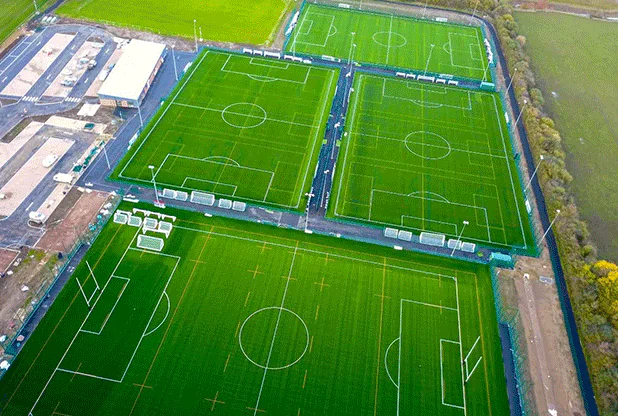
The number, condition and accessibility of grassroots football facilities (natural grass and 3G) have an ongoing impact on participation (among male and female players of all ages) and on the value and effectiveness of the domestic player pathway.

The FA’s 10-year strategy to change the landscape of football facilities in England has, for the last 4-6 years, been underpinned by an action plan for investment in every local authority, referred to as a local football facility plan (LFFP). These are utilised, by the Football Foundation and county FAs as one (among others) of the strategic indicators of facility need (albeit preferably endorsed by an up-to-date PPS generated needs assessment) and thus help to justify Foundation capital investment.

Working closely with the FA and county FAs, the Football Foundation, Sport England and the DCMS, KKP delivered the original LFFP programme. Run over an intensive two-year period, all 318 LFFPs, one for each local authority in England, were completed by between 2018 and mid-2020.

The feedback on existing facilities received at the time as part of the LFFP process mirrored the national strategy painting a picture of poor-quality grass pitches, changing pavilions requiring refurbishment and insufficient club/team access to sports lit, 3G football turf pitches.  Having, as part of that process, spoken directly to over 2,000 grassroots football clubs, 300 local authorities plus a range of other stakeholders, the LFFPs developed by our team and the county FAs identified an excellent portfolio of pipeline projects.

This new round of refreshed LFFPs will update information held at all levels about the extent to which projects listed in the original plans have been implemented and the impact on local supply/demand. The process will also ensure that the new LFFPs reflect the 13% year-on-year growth in levels of participation in the girl’s and women’s game – which necessitates additional consideration in respect of the nature and quality of ancillary provision. Arguably also fuelled by the success of the national team, it is predicted that women and girls will account for 21% of all football demand by 2030.

It also reflects the Government’s desire to see that a wider range of sports benefit from this investment.

The majority (200+ and possibly up to 250) of the LFFPs originally commissioned are being updated. In some instances, local government structural change (resulting in fewer individual local authorities) need now to be accounted for. There is also a need for revised national capital expenditure estimates to inform the FA/ Football Foundation dialogue with the new Government about future investment in playing pitch provision.

Claire Waldron, Senior Facilities Planning Manager at the Football Foundation said ‘we are pleased to have commissioned KKP to update the excellent work delivered on the first round of LFFPs. KKP was commissioned, because of the quality of its submission, its knowledge and understanding of the LFFP process and because of its continued pre-eminence delivering playing pitch strategies – the findings and recommendations from many of which will usefully inform this process’.

Paul Hughes, Senior Consultant at KKP who is leading the national refresh process said ‘we were delighted to have been commissioned to deliver this assignment. In so doing, we are looking to build on the strong stakeholder commitment when we ran the original LFFP process, our own PPS-generated information and the excellent relationships we have with the Foundation, county FAs, NGBs and other partners in the sector’.

Contact: Paul Hughes: Senior Consultant (paul.hughes@kkp.co.uk)


Notes

KKP is a leading UK-based multi-disciplinary national and international sports consultancy practice. It offers specialist advice and impartial, objective and creative support to a wide portfolio of clients.

Full detail about KKP’s work, clients and projects is available at www.kkp.co.uk


KKP – delivering the Birmingham Sports Strategy

In mid-2023, Birmingham City Council commissioned KKP to deliver the City’s new 10-year Sports Strategy.

The aim is to create a vision for sport in Birmingham informing its ambition to get more people participating in sport and providing opportunities from grassroots through to elite performance. Having now undertaken a good proportion of the consultation KKP is, taking account of the financial pressures that the City Council now faces, reviewing the whole sports offer in the City and is in the process of developing its revised strategy framework.

The Sports Strategy, reflecting the substantively altered fiscal circumstances of the City, will help to provide realistic direction for the Council in its maintenance, development and delivery of sustainable sport, across services and facilities and inform how it meets the needs of residents and local communities. It is being co-ordinated with and delivered alongside the Physical Activity Strategy concurrently being developed by the City’s Public Health team. This will ensure a joined-up approach and vision.

It will align to Sport England’s ‘Uniting the Movement’ and Sport Birmingham’s ‘Uniting Birmingham’ strategies and is being developed within the context of Birmingham’s ‘Be Bold’ outcomes, the City’s Corporate Plan and Major Events Strategy. Birmingham and Solihull is also a Sport England Local Delivery Pilot (LDP) area.

Birmingham is the largest local authority in Europe. With a population of almost 1.2 million, it has a significantly younger and more ethnically diverse population profile than the national average.

Renowned for its passion for sport, Birmingham has, to date, annually hosted a series of major sporting events. In summer 2022 it staged the most inclusive Commonwealth Games ever showcasing its ability to deliver an international major event, inspiring local people to get involved and demonstrating sport’s ability to impact local communities and provide wider social benefit.

The City’s diverse range of sports clubs, community organisations and voluntary groups all provide opportunity for people to engage in sport and physical activity from informal entry level to organised activity and competition and up to talent and elite performance levels. Their work is delivered by a huge, dedicated workforce of volunteers, coaches, officials and administrators.

The City’s public and privately operated sports and leisure facilities including the Alexander Stadium, and other Commonwealth Games funded venues accommodate a significant proportion of this participation and provide a range of sporting opportunities for residents.

Birmingham is also one of Britain’s greenest cities. More than one fifth of its area comprises parks, nature reserves, allotments, golf courses and playing fields, many linked by rivers, watercourses and its extensive canal network. This will be further enhanced by implementation of the Our Future City: Central Birmingham Framework 2040.

A key issue is the part sport plays in tackling physical inactivity levels and addressing substantial inequalities in participation. Birmingham is the 7th most deprived local authority area in the country, 43% of its population resides in the 10% most deprived areas in England (IMD 2019) and this figure rises to 51% among under 16s. The Sports Strategy will consider and proscribe the role that sport will play in engaging the City’s deprived and ethnically diverse communities, women, disabled people, and those with long term health conditions.

Dave Wagg, Head of Sport and Physical Activity at Birmingham City Council commented “we are delighted, with the support of Sport England, to be working with KKP on this strategy. We are fully aware of the depth, breadth and quality of the Company’s work and welcome its review of what we do, where why and how – and how we can best adapt to the present situation. The intention is to build upon our strengths and identify key areas for improvement. A key reason for KKP’s appointment is its proven expertise and major city strategy experience in Manchester, Glasgow, Leeds, Liverpool, Sheffield, Bristol, Cardiff and, of course, previously in Birmingham”.

Andrew Fawkes, principal consultant at KKP is leading KKP’s Sports Strategy project team. He commented: ‘KKP is proud to be entrusted with this work with the City Council and partners on this strategy at what is a difficult time. We are working closely with key staff and stakeholders to help it consider and take on the very considerable challenges that developing a directive and impactful strategy now presents.

Andrew Fawkes is available for interview. Please contact KKP via (0)161 764 7040 or email andrew.fawkes@kkp.co.uk

KKP is online at www.kkp.co.uk

Notes for editors

KKP is a leading UK-based multi-disciplinary national and international practice. It offers specialist advice and impartial, objective and creative consultancy support to a wide portfolio of clients. This commission builds on KKP’s extensive track record in this field – which includes delivery of sport/physical activity strategies for, among others, Liverpool, Nottingham, St Helens, Wyre, Blackpool and LB Bromley.

Full details of KKP’s work, clients and projects are available at www.kkp.co.uk

Play – training for the unexpected!


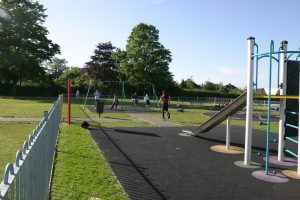
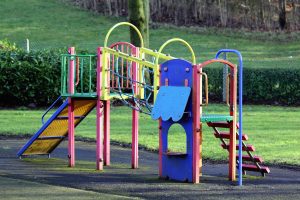
Children’s play facilities are still an important aspect of leisure provision for young people but there is also a growing recognition of the place of X-sports in local authority open spaces’ and facilities strategies. Paul Barrett explains how some of KKP’s recent projects offer some pointers for the future.

To the casual observer it is easy to overlook play facilities as one of the essential elements of an open spaces or sports facility strategy. There they are: adjacent to or part of a park or open space, quiet for much of the day during the school week until they fill with children and accompanying adults when the school day ends. However, if you are or have been one of those parents or carers, you will be all too aware of how important these play spaces are to a huge number of people, younger and older, across the community.

The stated mission of Play England is for England ‘to be a child-friendly country where all children and young people have freedom to play at home, at school, in parks and public spaces…where all children and young people can regularly play and have the freedom (time, space, permission and opportunity) to do so’. It considers play to be ‘an essential part of every child’s life and vital for the enjoyment of childhood as well as social, emotional, intellectual and physical development’.

Play needs assessments and strategies often function as a starting point for consideration of facility provision in a wider context – sometimes as a stand-alone process but most often as part of an open spaces’ strategy. KKP’s extensive experience in this field includes recent play strategies for Reading, Dudley and South Somerset. Each of these is a good example of how play provision is about much more than the installation and maintenance of equipment.

First and foremost, it is vital to consider play sites as part of a whole environment. This starts with an assessment of supply and demand: has the area (usually a local authority area) got sufficient provision of the right scale and quality in the right places to provide for the communities that need them now. We then consider population growth and projected housing development and the extent to which they are going to create greater demand in the future?

These judgements are not subjective. Fields in Trust provides guidance and recommendations for different catchment areas for play provision, which offers a useful starting point. In its guidance, play areas are generally classified as LEAPS (local equipped areas of play) or the normally larger NEAPS (neighbourhood equipped areas of play). Each of which reflects likely requirements for space and facility provision. Having evaluated what is there, we review and analyse the catchment areas they serve verifying the extent to which provision can be deemed to be sufficient and accessible to key local communities and populations.

Provision gaps and the quality of what is ‘on site’ is then evaluated: is it well-located (in the right place!), visible, well-lit, safe? Are the facilities and equipment in place appropriate? Is the condition not only of the available equipment but of the surrounds, surfaces and adjacent spaces and amenities good or poor? Should/could it be replaced, reimagined or even relocated?

If there are deficiencies, we consider what can be done to meet the standards of the guidance and the expectations of local communities. However, the answers to such questions are rarely quick or simple.

Quality assessment of facilities is underpinned by consultation with local communities, local officers and those involved and engaged with young people and youth provision. These conversations, often delivered alongside site visits, reveal challenges and options that may not be immediately obvious to the outside eye. For example, it is not uncommon (and is often a positive idea) to locate children’s play space adjacent to basketball courts, skateparks, multi-use games areas (MUGAs), and informal football provision.

On occasions, however, the use of sports play spaces can be dominated by specific groups or sometime predominantly male users – which can then impact perceptions of play provision accessibility and safety. This prompts questions about what can be done to improve the relevance and quality of provision for disabled people or to actively encourage women’s and girls’ usage and activities. This encompasses what facilities (and combinations thereof) might work best and how spaces can be made welcoming for everyone who might want to use them. Sport England has published useful guidance on how to make facilities look, feel and be safer for women and girls.

In addition, while provision of facilities and activities for young people is often well supported by local residents, there can be an underlying assumption among some that ‘youth provision’ is inevitably accompanied by anti-social behaviour. However, frustrating such assumptions might be, they need to be discussed and addressed if strategies are to be optimally effective. This is addressed via consultation with local youth groups and those who will use specific facilities. In addition to seeking to address the concerns of residents and stakeholders, this can also work to ensure that young people ‘own’ (and are subsequently inclined to use and look after) any new play equipment installed.

Alongside play strategies, we also assess cycling and walking access and related strategies. A recent assignment for Northwest Leicestershire Council involved assessing linkages between residential areas, key places of work, education, leisure, heritage, retail and other amenities across four main areas of population. Working extensively with Sustrans, we delivered extensive consultation with local communities, stakeholders and interested groups (of which there were many) all of which asked interesting questions and made constructive suggestions – helping produce a better outcome as the strategy progressed. This was supplemented via the use of data sources as an evidence base to support route proposals. These included the Propensity to Cycle Tool, an online and interactive planning support device which provides an evidence base to inform investment in cycling.

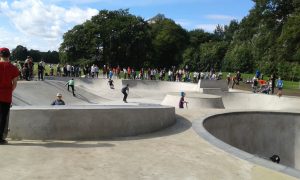
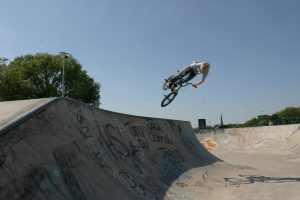
A, just completed, KKP facility strategy assignment which falls firmly into the ‘out of the ordinary’ category is our work assessing need for action (X) sport (skateboarding, BMX, in-line skating and scootering) facilities in Manchester. Reflecting the increased profile of skateboarding and BMX following their inclusion in the Olympic Games it is intended to build on the connection with younger participants and competitors and to cater more effectively for the high level of participation and interest in the City.

In Manchester we assessed the feasibility (and the potential component elements) of a major skateboarding and freestyle BMX indoor facility as part of its elite sport provision. This process was undertaken alongside a needs assessment and the development of a strategy for provision of new and improved skate and BMX facilities at outdoor and park sites across the city.

In implementing this, the City is looking to offer a high-quality, easily accessible network of X-sport venues. These will both better serve the recreational ambitions of people in all its communities and, possibly, offer an entry point via which someone ends up on the path to elite competition and Olympic glory.

While the sports themselves are relatively new to the realm of elite and certainly Olympic competition, the planning process remains essentially the same. It incorporates in-depth data-collection, effective use of KKP’s sector-leading geographic information systems (GIS) to assess accessibility and reach into key communities plus a wide range of community-based meetings and consultation.

We gathered the views of local residents, existing facility users and interest groups, liaised with the national governing bodies of the various sports, conducted numerous site visits and extensive research to create a range of proposals and options for viable and sustainable facilities that will both stimulate use and stand the test of time.

The process also involved KKP team members assessing the approach taken to developing outdoor action sports facilities in European cities such as Malmo and Bordeaux and visiting existing indoor/outdoor skateboarding provision in Northamptonshire, Nottingham and Lancashire.

While these highly valuable learning opportunities took us out of our immediate sporting comfort zones, we are looking forward to revealing our inner X sport radical selves in due course. To provide accurate and informed assessments of the installation and maintenance costs of provision KKP worked with Abacus Associates and, given its extensive experience of skate and BMX facility design, we are confident that our team will emerge from this process with a first-class strategy and only minor grazes.

The City of Manchester is forward looking in the way in which it is considering investment in such facilities. The newly acquired elite status of X sports fits well with Manchester’s vision of itself as a national and international focal point for both elite and community sport – and play. With a large, diverse population, good regional connections and national transport links, numerous NGBs have already made it their home in and X sports are a welcome addition to the roster.

Paul Barrett is a senior consultant with KKP.

KKP to deliver national officials feasibility study for Ireland

Sport Ireland, working in partnership with Sport Northern Ireland, has commissioned KKP to deliver research, consultation and recommendations to inform development of a national technical officials’ development plan (TODP) for Ireland.

This action directly reflects, and is an immediate response to, commitments made in, Sport Ireland’s recently launched Statement of Strategy 2023-2027 and Sport NI’s Corporate Plan 2021-26.

It follows hard on the heels of the Review of Women’s Sports Officiating in Ireland undertaken by KKP in 2022 and will utilise and build upon the findings of that process. The TODP report will:

  • Identify and describe the range of roles undertaken by technical officials in Ireland.
  • Assess levels of activity among technical officials in Irish sport and consider the key factors which affect recruitment, retention and attrition.
  • Evaluate the needs of technical officials and of those who support them.
  • Review the support currently provided to technical officials and those working to support them.
  • Make recommendations about what should be included in the TODP and how it should be led, resourced and managed.

Sport Ireland and Sport NI are actively seeking to secure strong support for this process from NGBs (all Ireland and NI) plus the active participation and support of other key agencies such as LSPs and third sector education providers. To this end, NGBs and others with an interest in this process are being encouraged to:

  • Confirm their willingness to be consulted and to indicate who, within their organisations might be the most appropriate contact.
  • Make it possible to include as many current and former technical officials as possible from the widest cross-section of sports in a national survey – scheduled to be conducted in spring 2024.

Consultation, survey and focus group/ workshop processes will include and capture the views of:

  • People involved (an a paid/voluntary basis) in the recruitment/organisation/training/support of officials.
  • Current/aspiring/former paid and voluntary technical officials from a wide range of individual/ team sports, disability sport and sports where specialist officiating is required.
  • Officials ‘covering’ all levels and types of technical experience and the full range of roles.
  • People with expertise/opinions in respect of volunteering issues for officials and knowledgeable representatives from the education system and LSPs.

The process is scheduled to run between November 2023 and May 2024.

Project leads are Fiona Larkin at Sport Ireland (flarkin@sportireland.ie) and Michael Cooke from Sport Northern Ireland (michaelcooke@sportni.net).

**

KKP is one of the UK’s largest independent sport and leisure management practices. It delivers planning, consultancy and research services to the sports sector in the UK, Ireland, China and Southeast Asia.

Contact: John Eady (CEO) john.eady@kkp.co.uk